The Humble Midwestern Farmhouse Classic That Turns an Inexpensive Cut of Beef and a Handful of Pantry Staples Into the Most Silky, Deeply Satisfying Bowl of Comfort Food You Will Make All Year
There is a category of recipe that does not seek attention or admiration — it simply shows up, week after week, does exactly what it promises, fills every belly at the table, and earns the kind of quiet, unconditional loyalty that flashier dishes never manage to hold. Poor Man’s Beef and Noodles is that recipe. It is what a mother makes when the grocery budget is tight but the family still needs something warm and filling and genuinely good. It is what grandmothers kept in steady rotation through decades of feeding farm households and large broods on modest incomes. It is the kind of food that people describe not with culinary vocabulary but with something simpler and more accurate — it tastes like home.
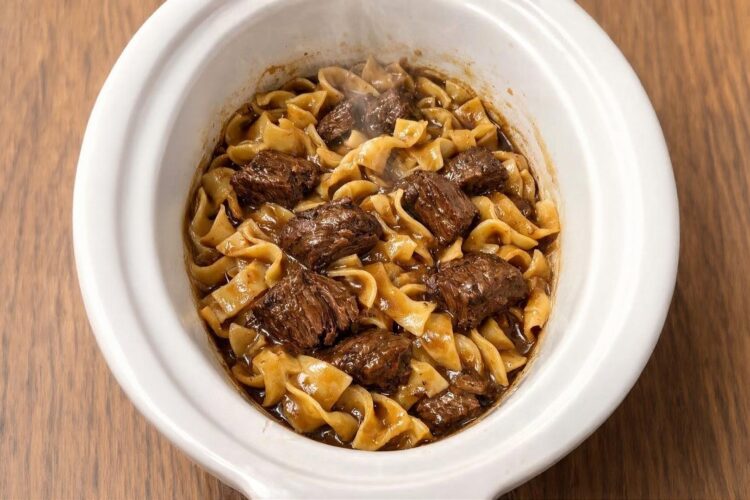
Four ingredients. Beef stew meat or chuck roast, two cans of condensed cream of mushroom soup, two packets of brown gravy mix, and wide egg noodles added directly to the slow cooker in the final thirty minutes of cooking. That is everything. The beef braises low and slow in the mushroom-gravy sauce for seven to eight hours until it falls apart at the touch of a fork, and the dry noodles — stirred into the hot, glossy, dark brown gravy and left to cook for twenty-five minutes — absorb the surrounding liquid and emerge silky, deeply flavored, and coated in a rich sauce that clings to every surface. The result is a bowl of something so deeply satisfying that people eat it in comfortable silence, occasionally reaching for bread to soak up the last of the gravy, and feel genuinely restored by the time the bowl is empty.
Beef and noodles is a dish so deeply embedded in Midwestern food culture that it functions almost as a regional identifier — the kind of food that people from Ohio, Indiana, Iowa, and Nebraska grow up eating without realizing that it is specifically, distinctively theirs until they move somewhere else and cannot find it on any menu. Unlike beef stroganoff — its more internationally recognized cousin — Midwestern beef and noodles tends to be simpler, heartier, and less cream-forward, built around a proper brown gravy rather than a sour cream sauce, and served in generous portions that prioritize substance over elegance.
The dish traces its roots to the practical farmhouse cooking tradition of stretching affordable cuts of beef through long, slow cooking that transforms their tough collagen into tender, yielding meat and their modest fat content into rich, beefy cooking juices. The noodles — always wide, always egg-based — were an economical and calorie-dense addition that made the dish filling enough to sustain people doing heavy physical work. The gravy, built from those cooking juices, was what made the whole thing cohere into something genuinely satisfying rather than merely adequate.
This slow cooker version honors that tradition completely while reducing the active cooking time to almost nothing — which is exactly the kind of practical, family-feeding efficiency that the tradition was built on in the first place.
Servings: 6 | Equipment: 5 to 7-quart slow cooker
- 2 lbs beef stew meat or chuck roast, cut into 1 to 2-inch chunks — the foundation of the entire dish and the ingredient whose transformation during the long cooking time is most remarkable. Beef stew meat is pre-cut chuck or round sold in small pieces — convenient and correctly sized for this recipe. A whole chuck roast cut into 1 to 2-inch chunks at home produces an identical result and is often more economical per pound. Whatever cut you use, the key quality to look for is adequate marbling — thin threads of fat running through the muscle tissue — because that intramuscular fat renders during the long cook and contributes both moisture and flavor to the surrounding sauce. A very lean stew meat will produce drier, less flavorful beef regardless of cooking time.
- 2 cans (10.5 oz each) condensed cream of mushroom soup — used straight from the can without dilution. These two cans provide the creamy body and savory depth of the sauce base, contributing both the richness that coats the noodles and the mushroom-forward umami that makes the gravy taste more complex than its two-ingredient origin suggests. The beef will release significant moisture during the long cooking time, thinning the concentrated soup into a perfectly saucy consistency without any added water at the beginning.
- 2 packets (0.87 to 1 oz each) brown gravy mix — whisked directly into the condensed soup before pouring over the beef. The gravy mix provides the brown color, the beefy depth, the salt, and the starch that transforms the cream of mushroom soup from a pale, creamy sauce into something deeply brown, richly flavored, and genuinely gravy-like in appearance and taste. The two packets together season the entire dish, which means additional salt is rarely needed at the end.
- 12 oz wide egg noodles (about 6 cups dry) — added to the slow cooker in the final 20 to 30 minutes of cooking rather than boiled separately. Wide egg noodles are specified over any other pasta shape because their flat, broad surface absorbs the surrounding gravy most efficiently and creates that characteristic silky, richly coated texture that defines this dish. Adding them dry directly to the hot gravy means they cook in and absorb that flavored liquid completely, emerging permeated with beef and mushroom and gravy flavor rather than tasting of plain boiled starch.
Prep time: 10 minutes | Cook time: 7–8 hours on LOW + 20–30 minutes for noodles | Servings: 6
Step 1 — Add the Beef: Place all the beef stew meat chunks in the bottom of the slow cooker insert, spreading them into as even a layer as possible so every piece has maximum contact with the surrounding sauce during the long braise.
Step 2 — Make the Sauce: In a medium mixing bowl, combine both cans of condensed cream of mushroom soup and both packets of brown gravy mix. Whisk together vigorously until the gravy mix is completely dissolved into the soup and the mixture is smooth, uniform, and free of dry powder. Do not add any water at this stage — the beef will release a significant amount of moisture during cooking that naturally thins the concentrated sauce mixture to the perfect consistency.
Step 3 — Pour and Coat: Pour the sauce mixture evenly over the beef in the slow cooker, using a spatula to scrape every last bit from the bowl. Stir gently to coat all the beef pieces in the sauce, then settle the beef back into as flat a layer as possible so it braises rather than steams during the long cook.
Step 4 — Cover and Cook: Place the lid firmly on the slow cooker and cook on LOW for 7 to 8 hours or HIGH for 4 to 5 hours, until the beef is completely fall-apart tender and pulls apart easily when pressed with a fork. The gravy should be deeply colored, glossy, and noticeably thicker than the sauce mixture was at the start of cooking — all that beef-released moisture has been absorbed into the surrounding liquid, concentrating its flavor and giving it a proper gravy consistency.
Step 5 — Break the Beef: About 30 minutes before you plan to serve, remove the lid and use a fork to gently break any remaining large beef chunks into bite-sized pieces directly in the slow cooker, stirring them back into the gravy so every piece is surrounded and coated.
Step 7 — Cook the Noodles: Cook on HIGH for 20 to 30 minutes, lifting the lid to stir once or twice during the cooking time to prevent the noodles from sticking together or settling on the bottom of the insert. The noodles are done when they are completely tender throughout with a silky texture and are visibly coated in the surrounding gravy — they should not be firm or chalky at the center, and they should not be mushy or broken. Taste and adjust seasoning if needed, though the gravy packets typically provide sufficient salt for most palates.
Step 8 — Serve: Ladle generous portions directly from the slow cooker into deep bowls, making sure every serving includes a substantial amount of beef, a generous portion of noodles, and plenty of the rich brown gravy spooned over everything. Serve immediately while steaming hot.
Serve this beef and noodles in the deepest bowls you own with the gravy ladled over generously — the gravy is half the pleasure and every serving deserves abundance of it. Buttered corn, steamed green beans, or a simple lettuce salad with a light vinaigrette alongside balance the richness of the main dish perfectly. For stretching the meal even further — a tradition as old as the recipe itself — ladle the beef and noodles over creamy mashed potatoes or onto thick slices of white bread that absorb the gravy and turn into something extraordinary. Sliced tomatoes or a jar of dill pickles on the table provides the bright, acidic contrast that cuts through the richness and makes each subsequent spoonful of gravy taste even better. For storage, refrigerate cooled leftovers in shallow airtight containers within 2 hours and use within 3 to 4 days. When reheating on the stovetop, add a small splash of water or beef broth to loosen the gravy, which will have thickened considerably as the noodles continue absorbing liquid during refrigeration.
For the deepest, most complex beef flavor in the finished dish, brown the stew meat in a hot skillet with a small amount of oil before placing it in the slow cooker — working in batches so the pieces sear rather than steam, developing a deep mahogany crust through the Maillard reaction that adds a layer of toasted, caramelized flavor to the surrounding gravy that unbrowned beef cannot provide. For a creamier, richer sauce, stir ½ cup of sour cream into the gravy just before adding the noodles — it creates a flavor somewhere between classic beef and noodles and beef stroganoff that is deeply satisfying. For hidden vegetables, stir 1 cup of frozen peas or frozen mixed vegetables into the slow cooker during the final 10 minutes of noodle cooking — they heat through completely without overcooking and add color, nutrition, and freshness to each bowl. For a more substantial sauce, add a third can of condensed cream of mushroom soup with ½ cup of additional water at the beginning of cooking.
Can I use a different pasta shape instead of wide egg noodles? Wide egg noodles are strongly recommended for the texture and absorption qualities they bring to this specific dish, but medium egg noodles work as a substitute. Regular pasta shapes — penne, rotini, or spaghetti — do not absorb the gravy in the same way and produce a noticeably different, less satisfying result. If you cannot find egg noodles, frozen homestyle noodles — sold in the freezer section of many grocery stores — are an exceptional substitute that many Midwestern families actually prefer.
My noodles turned out mushy — what went wrong? The noodles cooked too long or at too high a temperature. They should go into the slow cooker no more than 30 minutes before serving, and the lid should be replaced promptly after adding them to maintain the consistent temperature needed to cook them properly without overcooking. Check them at the 20-minute mark and serve as soon as they are tender.
Can I freeze this dish? The beef and gravy freeze beautifully for up to 2 months — but freeze it before adding the noodles, as cooked egg noodles do not freeze and reheat well, becoming mushy and breaking apart upon thawing. Thaw the beef and gravy overnight in the refrigerator, reheat in the slow cooker or on the stovetop, and add fresh noodles in the final 20 to 30 minutes before serving.
Four ingredients. Ten minutes of morning prep. A slow cooker doing patient, unhurried work all day. And a bowl at suppertime that tastes like someone who loved you made it specifically for you — because that is exactly the kind of food this has always been.
Poor Man’s Beef and Noodles is not trying to be impressive. It is not trying to be sophisticated or photogenic or on-trend. It is trying to feed people well, to fill the table with something warm and genuine and deeply satisfying, to stretch a modest budget into a meal that nobody at the table feels cheated by. It has been doing exactly that, in kitchens exactly like yours, for generations — and it will keep doing it long after every trendy recipe has been forgotten. Some food earns its place at the table not through ambition but through reliability, through the quiet, steady promise that it will always be exactly what it claims to be. This is that food. Keep it in your rotation. Your family will thank you for it.