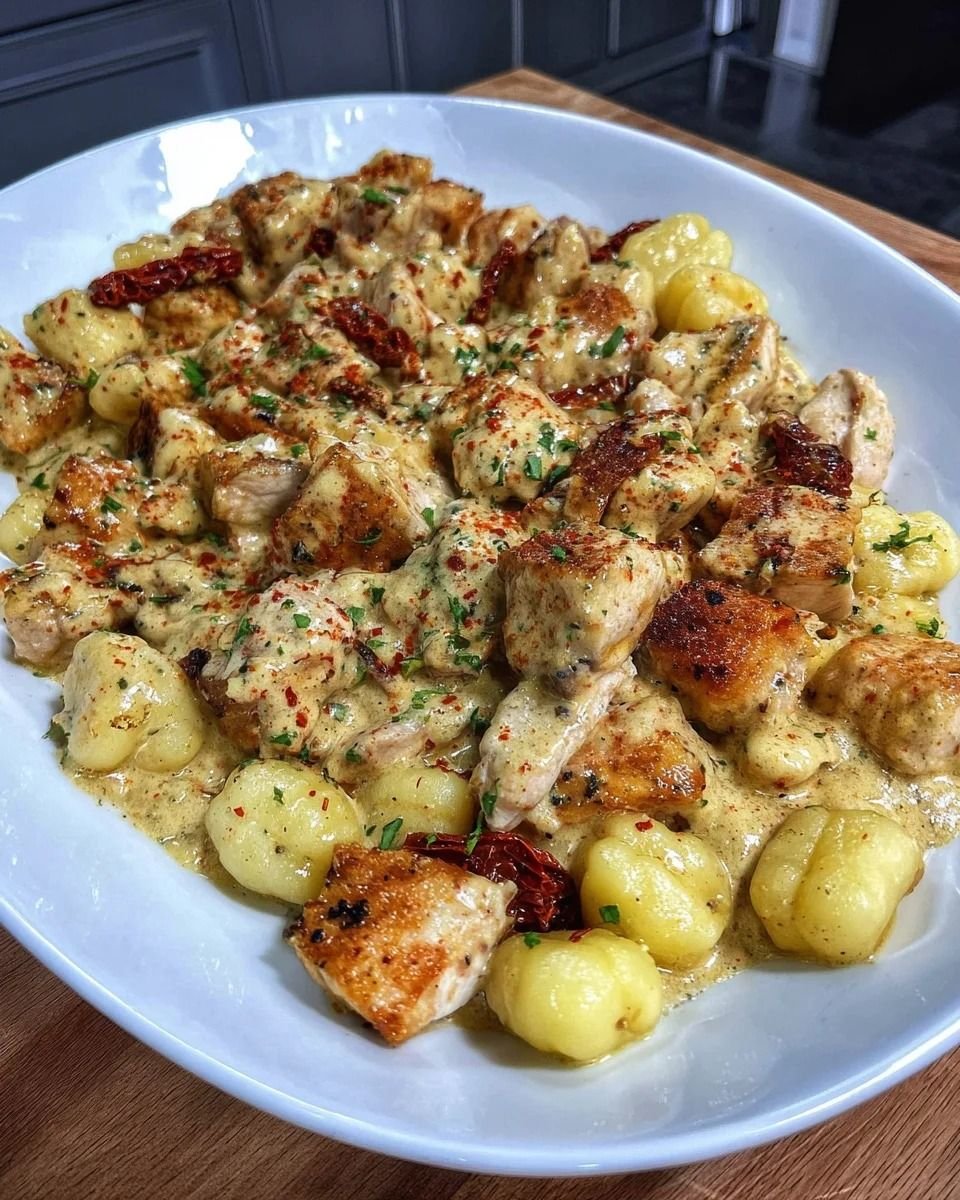
This Ultimate Creamy Chicken and Gnocchi is a masterclass in Textural Contrast and Emulsion Stability. While often compared to a famous restaurant soup, this version is engineered to be a rich, “spoonable” meal that prioritizes the pillowy softness of the gnocchi against a velvet-smooth cream base.
The primary engineering challenge of a gnocchi-based dish is Starch Retrogradation and Liquid Absorption. Gnocchi act like sponges; if they are simmered too long, they absorb the sauce’s water, leaving you with a gummy paste rather than a creamy soup. We solve this by using a Late-Stage Inclusion Protocol, where the gnocchi are added only at the very end to ensure they reach perfect tenderness just as the sauce achieves peak viscosity.
The Ingredient Architecture
- The Protein: 1.5 lbs (approx. 700g) Boneless, Skinless Chicken Breasts, diced into 1/2-inch cubes.
- The Starch: 1 package (16 oz) Potato Gnocchi (shelf-stable or refrigerated).
- The Aromatic Base: 1 medium Yellow Onion (finely diced), 2 medium Carrots (shredded), and 2 stalks Celery (finely diced).
- The Liquid Matrix: 4 cups High-Quality Chicken Bone Broth and 2 cups Heavy Cream.
- The Thickener: 1/4 cup All-Purpose Flour and 4 tablespoons Unsalted Butter.
- The Flavor Boosters: 3 cloves Garlic (minced), 1 teaspoon Dried Thyme, 1/2 teaspoon Poultry Seasoning, and 2 cups Fresh Baby Spinach.
- The Finish: 1/2 cup Freshly Grated Parmesan Cheese and a squeeze of Lemon Juice to cut the richness.
Phase 1: The Lipid-Aromatic Fusion
The depth of flavor starts with the Mirepoix (onions, carrots, celery). In a large Dutch oven, melt the butter over medium heat. Add the chicken cubes and cook until browned on all sides. Remove the chicken and set aside.
Add the onions, carrots, and celery to the residual chicken fat and butter. Sauté for 5–7 minutes until the onions are translucent. Add the garlic, thyme, and poultry seasoning, stirring for 60 seconds until fragrant.
The Science: Sautéing the spices in fat (blooming) releases their fat-soluble essential oils, ensuring the flavor is distributed through the entire lipid phase of the cream sauce rather than just floating on top.
Phase 2: The Roux and Broth Integration
Sprinkle the flour over the sautéed vegetables. Stir constantly for 2 minutes. This creates a “vegetable roux” that will act as the structural stabilizer for the heavy cream.
Gradually pour in the chicken bone broth, whisking continuously to prevent flour clumps.
The Logic: By adding the broth slowly, you allow the starch granules in the flour to swell and gelatinize evenly. Bring the mixture to a simmer and let it thicken for 5 minutes. Return the browned chicken to the pot.
Phase 3: The Dairy Emulsion and Gnocchi Inclusion
Once the base is thickened, stir in the heavy cream. Lower the heat to medium-low to avoid “breaking” the dairy emulsion.
Now, add the potato gnocchi.
The Engineering: Do not pre-boil the gnocchi. By cooking them directly in the sauce, the gnocchi release a small amount of their own surface starch into the liquid, further thickening the meal and ensuring the sauce clings to every pillowy bite. Simmer for only 3 to 4 minutes—just until the gnocchi float to the surface.
Phase 4: The Green Fold and Acid Balance
In the final 60 seconds of cooking, stir in the fresh baby spinach and the grated Parmesan. The residual heat will wilt the spinach and melt the cheese without overcooking them.
The Final Touch: Stir in a teaspoon of lemon juice.
Why? The citric acid acts as a “brightness dial,” highlighting the savory chicken notes and preventing the heavy cream from feeling too “cloying” on the palate. Serve immediately in warm bowls with crusty bread.