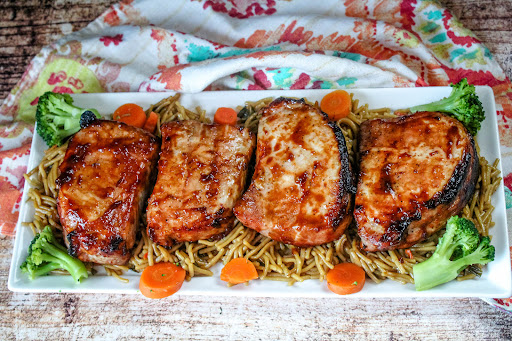
Honey Garlic Boneless Pork Chops is a dish centered on Caramelization Kinetics and Protein Hydration. Boneless pork chops, primarily composed of the longissimus dorsi muscle, are notorious for their low intramuscular fat. To prevent the meat from becoming fibrous and dry, this recipe utilizes a High-Heat Sear-and-Baste Method, which uses a honey-based glaze to create a protective, flavorful barrier that locks in moisture.
1. Project Specifications
- Prep Time: 15 minutes (Trimming and Seasoning).
- Cook Time: 10–12 minutes (Stovetop).
- Total Time: 27 minutes.
- Servings: 4 Adults.
- Estimated Cost: $12.00 – $18.00 USD.
- Cost Drivers: Center-cut boneless chops ($8–$12), raw honey ($2), and fresh aromatics.
2. The Ingredient Architecture
The Protein Foundation:
- 4 Center-Cut Boneless Pork Chops: Ideally 1-inch thick. Thinner chops will overcook before the glaze caramelizes.
- Kosher Salt & Coarse Black Pepper: For initial surface denaturing.
- 1/2 cup All-Purpose Flour: For dredging. This creates a starch surface that the sauce can “grip.”
The Umami-Glaze Matrix:
- 1/3 cup Raw Honey: Acts as the primary sweetener and glazing agent.
- 1/4 cup Warm Water or Chicken Broth: To adjust the viscosity of the reduction.
- 2 tbsp Soy Sauce: Provides salinity and the dark pigments for the Maillard reaction.
- 1 tbsp Apple Cider Vinegar: The acid component required to “brighten” the heavy sugars.
- 6 cloves Garlic: Smashed and minced. High garlic volume is essential for the “sticky” texture.
3. Engineering Phase 1: The Starch-Barrier Coating
Pork chops often lose moisture rapidly through their surface. We mitigate this using a Flour Dredge.
- The Science: Season the chops, then lightly coat them in flour. This starch layer serves two purposes: it facilitates a more even browning (Maillard reaction) and it eventually leaches into the sauce, acting as a thickener that helps the glaze emulsify.
4. Engineering Phase 2: High-Velocity Searing
Heat a heavy stainless steel or cast-iron skillet over medium-high heat with 1 tablespoon of neutral oil and 1 tablespoon of butter.
- The Sear: Place the chops in the pan. Do not crowd them. Sear for 3–4 minutes per side until a deep golden crust forms.
- The Logic: You are not cooking the pork all the way through yet. You are establishing a savory crust that will withstand the simmering process. Remove the chops and set them aside on a plate.
5. Phase 3: Glaze Synthesis and Emulsification
In the same pan, lower the heat to medium. Add the minced garlic.
- Deglazing: Sauté the garlic for only 30 seconds to release essential oils without burning the bitter sulfur compounds. Add the honey, soy sauce, vinegar, and water/broth.
- The Reduction: Use a wooden spoon to scrape the bottom of the pan (deglazing), incorporating the “fond” (browned meat bits) into the sauce. Simmer for 2–3 minutes until the liquid reduces by 30% and starts to form large, slow-popping bubbles.
6. Phase 4: The Basting Set
Return the pork chops to the skillet.
- The Final Hydration: Flip the chops to coat them entirely. Use a spoon to continuously pour the hot glaze over the meat.
- Internal Target: Cook for an additional 2–3 minutes until the internal temperature reaches 145°F (63°C). This specific temperature ensures the meat is safe while remaining succulent and slightly pink in the center.
7. Serving and Presentation
Mandatory Rest Period: 5 minutes.
- The Result: The rest allows the muscle fibers to relax, which re-distributes the internal juices. If cut too soon, the honey-garlic emulsion will wash away with the lost juice.
- Garnish: Serve over a neutral starch like Jasmine Rice or Garlic Mashed Potatoes to absorb the excess glaze. Top with sliced scallions or sesame seeds for a textural and color contrast.