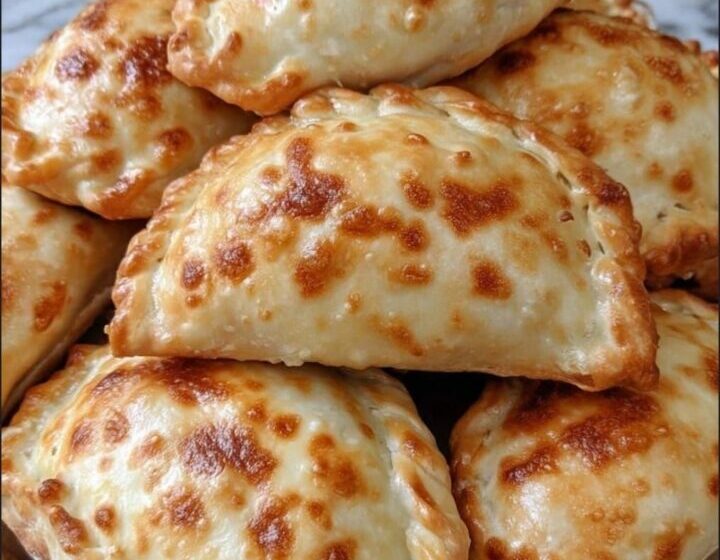
In the architectural history of the Caledonian region, the Forfar Bridie represents a triumph of Structural Integrity and Moisture Containment. Unlike the Cornish Pasty, which utilizes a chemically-leavened shortcrust, the authentic Forfar Bridie relies on a Laminated Flaky Pastry and a “dry-filling” philosophy. We are engineering a handheld pressure vessel where the minced protein provides its own internal lubrication via rendered lipids, rather than an external gravy.
Project Specifications
Success in this build requires managing the thermal transition of the suet-based or high-fat butter pastry to ensure it remains “short” and crisp rather than bread-like.
- Prep Time: 40 Minutes
- Inactive Time: 1 Hour (Pastry Hydration & Fat Hardening)
- Cook Time: 35–40 Minutes
- Total Time: 2 Hours 20 Minutes
- Servings: 6 Units (Individual Handheld Modules)
Detailed Cost Estimate (USD)
| Cost Driver | Role | Est. Cost |
|---|---|---|
| Coarsely Minced Rump Steak | Primary Structural Protein | $12.00 |
| Beef Suet or High-Fat Butter | Lipid Lamination Agent | $3.50 |
| Yellow Onions (Finely Diced) | The Aromatic Matrix | $0.75 |
| Beef Dripping (for searing) | Surface Thermal Interface | $1.00 |
| Total Estimated Cost | $17.25 | |
The Ingredient Architecture
The Laminated Containment Shell
500g All-Purpose Flour, 250g Suet/Butter, Ice Water: This is a “rough-puff” or Physically-Leavened Pastry. The goal is to create discrete layers of solid fat between planes of hydrated flour to induce flakiness upon steam release.
The Protein Core
600g Beef Rump Steak (Coarsely Chopped): We avoid “fine mince” to maintain Textural Definition. The beef must be chopped to approximately 5mm cubes to ensure the internal matrix has enough void space for heat circulation.
The Aromatic Matrix
2 Large Onions & Beef Bouillon Powder: Onions provide the necessary Aqueous Component. As they cook, they release moisture that steams the beef internally, eliminating the need for added liquid.
The Lubrication System
Beef Dripping: Used to coat the protein, ensuring that as the fibers contract during the thermal phase, they remain succulent through Lipid Coating.
The Phase-Based Workflow
Phase 1: Lipid-Starch Stratification
Mix flour and fat, leaving large, visible chunks of fat. Add ice water until just combined. Fold the dough over itself three times and refrigerate at 4°C (40°F) for 60 minutes.
The Science: This process creates Anisotropic Layers. When the pastry hits the high heat of the oven, the water in the fat turns to steam. Because the fat has created a barrier between the starch layers, the steam pushes the layers apart before they can fuse, creating “the puff.”
Phase 2: Internal Matrix Assembly
Season the raw chopped beef aggressively with salt and cracked black pepper. Mix in the raw onions. In a Bridie, the filling is Autogenously Cooked—meaning it cooks entirely inside the pastry, preserving all volatile flavor compounds.
Phase 3: Structural Sealing
Roll the pastry into 6 discs. Place the meat on one half, fold, and crimp the edges. Crucially, venting is determined by onion content: one hole for “no onions,” two holes for “with onions.”
Phase 4: Thermal Induction
Bake at 200°C (400°F) for the first 10 minutes to set the pastry, then reduce to 170°C (340°F) for 25 minutes to ensure the protein core reaches 71°C (160°F).
The Logic: The initial high-heat blast triggers the Mechanical Leavening (puffing). The subsequent lower heat allows for Connective Tissue Breakdown in the beef without burning the carbohydrate shell.
Resting & Servicing
The Bridies must undergo a 10-minute Redistribution Phase after extraction. This allows the internal vapors to re-absorb into the protein fibers.
The Science: Upon removal from the oven, the internal pressure is at its peak. Cutting immediately causes Hydraulic Escape (all the juice runs out). Resting allows the temperature to drop slightly, increasing the Viscosity of the Internal Lipids so they cling to the meat.
Final Service: Serve at approximately 55°C (130°F). This is the optimal temperature for flavor perception, where the savory glutamates are most active but the heat does not desensitize the taste buds.