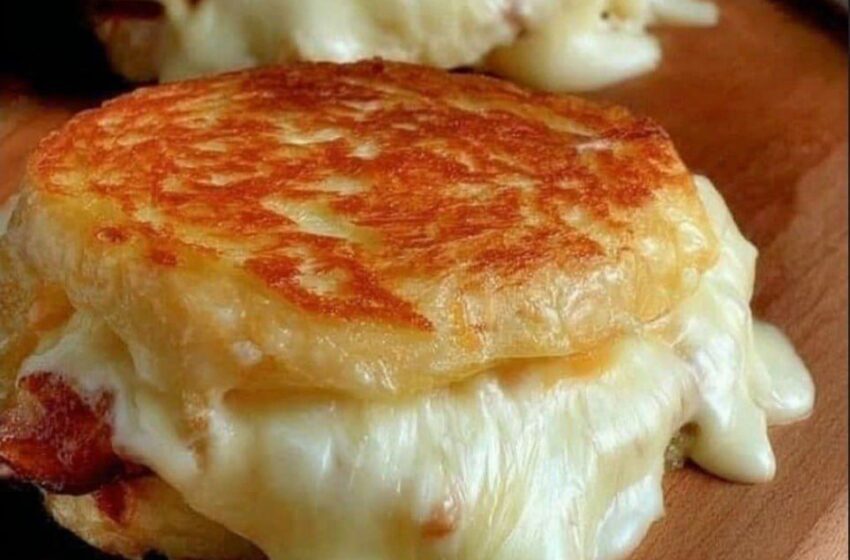
In the realm of domestic thermodynamics, the grilled cheese sandwich is often relegated to the status of a mere snack. This is a structural oversight. To the Technical Culinary Architect, it is a high-stakes engineering project requiring precise moisture-content management, lipid-to-starch lamination, and the optimization of the Maillard non-enzymatic browning reaction.
## Project Specifications
Before breaking ground, we must establish the logistical parameters of the build. Note that “Inactive Time” is dedicated to tempering—bringing structural components to thermal equilibrium.
- Prep Time: 15 Minutes
- Inactive Time (Tempering): 20 Minutes
- Cook Time: 8–10 Minutes
- Total Time: 45 Minutes
- Servings: 1 Unit (Scalable Architecture)
### Detailed Cost Estimate (USD)
| Cost Driver | Role | Est. Cost |
|---|---|---|
| Artisan Levain Sourdough | Structural Foundation | $1.50 |
| Aged Gruyère & Sharp Cheddar | Viscous Core (Internal Loading) | $3.50 |
| European-Style Cultured Butter | The Lipid Engine | $0.75 |
| Miso-Mayo Hybrid Emulsion | Thermal Interface Material | $0.25 |
| Total Estimated Cost | $6.00 | |
## The Ingredient Architecture
### The Starch Foundation
Two slices of 1.5cm thick Sourdough: High-density crumb is required to prevent “structural weeping” of the cheese. The acidic profile provides a chemical foil to the heavy lipids.
### The Viscous Core (The Matrix)
60g Aged Gruyère (Grated) & 40g Sharp White Cheddar (Grated): A multi-phasic blend. Gruyère provides the meltability (low-temperature flow), while the Cheddar provides the sharp flavor profile and tensile stretch.
### The Lipid Engine
Room Temperature Cultured Butter: High fat-to-water ratio is critical. We are seeking a 82% butterfat minimum to ensure crispness without steaming the bread.
### The Umami Matrix (The Secret Interface)
1 tsp White Miso + 1 tbsp Kewpie Mayonnaise: This hybrid provides a unique protein-rich surface for the Maillard reaction to thrive upon, beyond what simple butter can achieve.
## The Phase-Based Workflow
### Phase 1: Thermal Tempering and Surface Priming
Allow the cheese and butter to reach 21°C (70°F). Attempting to melt cold cheese using high external heat results in “Carbonization-Melting Disparity”—where the bread burns before the cheese reaches its glass transition temperature.
The Science: Tempering reduces the “Thermal Delta.” By decreasing the temperature gap between the ingredients and the pan, we ensure a simultaneous arrival at the desired physical states: golden-brown exterior and gooey interior.
### Phase 2: Lipid-Starch Lamination
Apply a thin, even layer of the Miso-Mayo emulsion to the exterior faces of the bread. On the interior, apply a micro-layer of butter. This creates a dual-sided moisture barrier.
### Phase 3: Structural Assembly
Distribute the cheese blend with absolute uniformity. Avoid “Central Massing”—the tendency for cheese to clump in the middle, which leads to raw bread edges and an undercooked core.
### Phase 4: Controlled Thermal Induction
Place a heavy-bottomed cast iron or carbon steel skillet over Medium-Low heat. Low and slow is the mantra. Place the sandwich in the pan and, crucially, apply a weight (a second pan or a bacon press).
The Logic: The weight increases the “Surface-Area-to-Heat-Source Contact.” This maximizes the efficiency of conduction, ensuring that the Maillard Reaction (the reaction between amino acids and reducing sugars) occurs evenly across the entire starch plane.
### Phase 5: The Flip and Polishing
Once the bottom plate has achieved a Chromatographic Gold (approximately 4 minutes), flip the unit. Add a small knob of butter to the pan just before the flip to refresh the lipid reservoir.
## Resting & Servicing
Upon extraction from the heat source, the sandwich must undergo a 90-second “Curing Phase” on a wire rack—never on a flat plate.
The Science: Placing a hot sandwich on a flat surface creates “Condensation Entrapment.” The residual steam migrates downward, turning your crisped starch foundation into a soggy cellular mesh. A wire rack allows for 360-degree atmospheric venting.
Final Service: Slice diagonally 45. This isn’t just aesthetic; the diagonal cut increases the exposed surface area of the viscous core, enhancing the olfactory experience during consumption.