Introduction
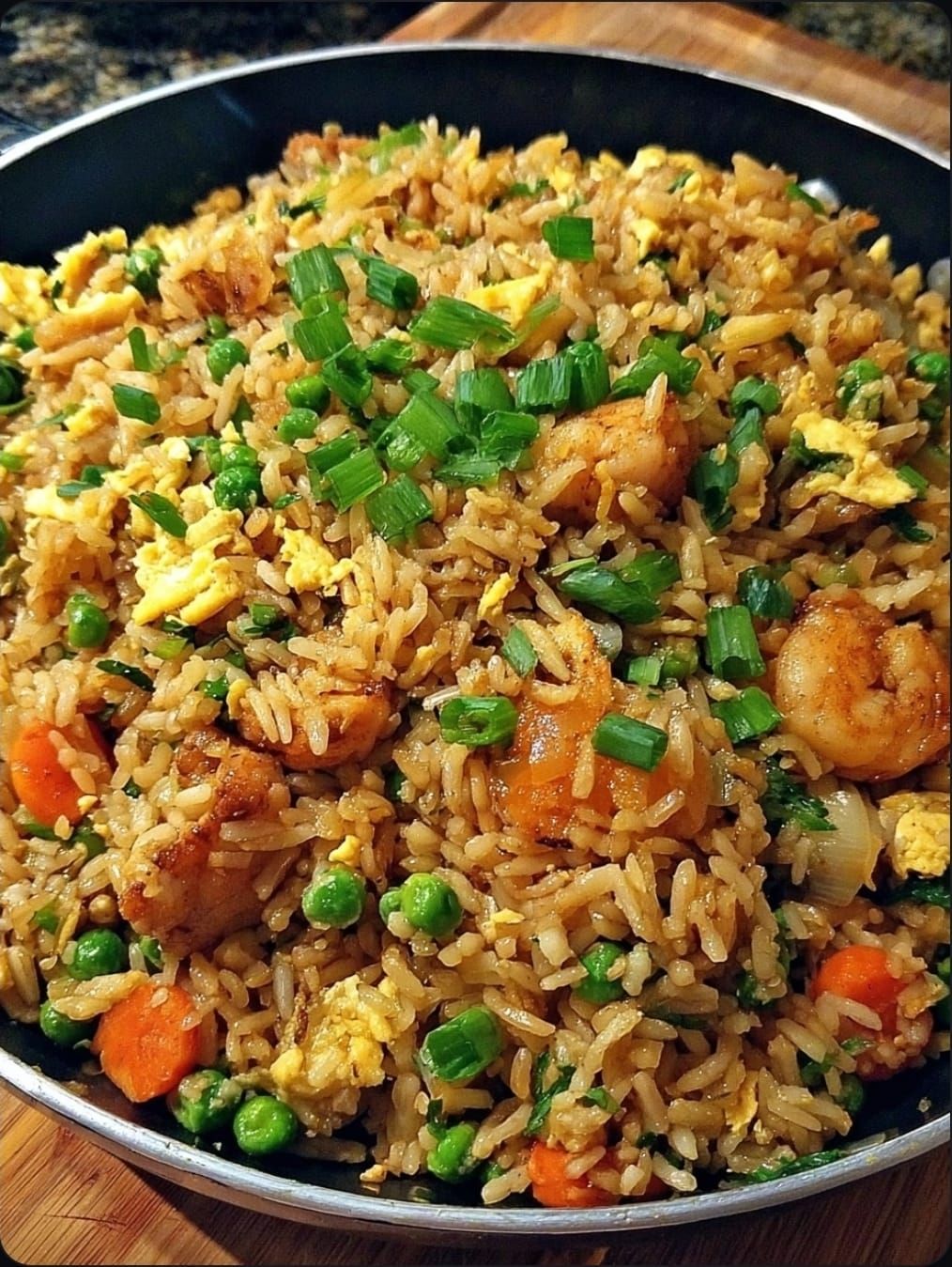
We have all been there: you order takeout fried rice, and it arrives oily, bland, or mushy. The truth is, making restaurant-quality fried rice at home is incredibly fast, and it actually tastes better because you control the quality of the ingredients.
The master secret to perfect fried rice comes down to a single rule: use cold, day-old cooked rice. Freshly cooked rice holds too much surface moisture, which causes it to steam and turn gummy in the pan. Chilled rice dries out just enough to absorb the savory soy-and-sesame glaze while frying up with that signature, distinct, “individual-grain” texture.
Ingredients
- The Starch Base:
- 3 cups Cooked White Rice (Jasmine or Long-Grain), chilled overnight in the fridge
- The Aromatics & Veggies:
- 2 tablespoons Unsalted Butter (divided)
- 1 tablespoon Vegetable or Canola Oil
- 1 small White Onion, finely diced
- 2 medium Carrots, peeled and finely diced
- ½ cup Frozen Peas, thawed
- 3 cloves Garlic, minced
- 3 Green Onions (scallions), thinly sliced (whites and greens separated)
- The Protein Binder:
- 3 large Eggs, beaten
- The Savory Takeout Sauce:
- 3 tablespoons Low-Sodium Soy Sauce
- 1 tablespoon Oyster Sauce (the secret to that authentic restaurant depth)
- 1 teaspoon Toasted Sesame Oil
- ¼ teaspoon Ground White Pepper (or black pepper)
Equipment Needed
- Large Wok or Large Non-Stick Skillet: You need plenty of surface area so the rice can fry rather than crowd and steam.
- Sturdy Spatula.
Time & Servings
- Prep Time: 10 minutes
- Cook Time: 10 minutes
- Total Time: ~20 minutes
- Servings: 4 side-dish or 2 large main-dish portions
Step-by-Step Instructions
1. Break Up the Cold Rice
Take your cold, day-old rice out of the fridge. Use your hands to gently break up any large clumps so the grains are separate and free-flowing before they hit the pan.
2. Scramble the Eggs
Heat 1 tablespoon of butter in your wok or large skillet over medium-high heat. Pour in the beaten eggs. Scramble them quickly, breaking them into small curd sizes with your spatula until just cooked through (about 1 minute). Transfer the eggs to a clean plate and set aside.
3. Sauté the Aromatics
Wipe out the pan if necessary, then add the 1 tablespoon of vegetable oil and the remaining 1 tablespoon of butter. Add the diced white onion and diced carrots. Sauté for 3–4 minutes until the carrots begin to soften and the onions turn translucent. Stir in the minced garlic and the white parts of the sliced green onions, cooking for just 1 minute until highly fragrant.
4. Fry the Rice
Turn the stove heat up to HIGH. Dump the cold rice directly into the pan with the vegetables.
The Technique: Use your spatula to constantly stir, toss, and gently press the rice down against the hot metal. Fry the rice for 3–4 minutes. You should hear a distinct sizzling sound, and the grains should start to take on a beautiful, pale golden-brown color.
5. Sauce and Toss
Drizzle the soy sauce, oyster sauce, toasted sesame oil, and white pepper evenly over the rice. Toss vigorously for 1–2 minutes until every grain of rice is coated in the glossy, savory brown sauce.
6. The Final Finish
Fold the scrambled eggs, the thawed green peas, and the green parts of the sliced scallions back into the wok. Toss for one final minute just to heat the peas and eggs through. Scoop hot straight from the wok into bowls!
Tips and Tricks
- The Butter Secret: While traditional Chinese wok cooking relies entirely on oil, American takeout spots often use a combination of vegetable oil and a pat of real butter. It adds a rich, savory back-note that makes the rice taste incredibly luxurious.
- Emergency Rice Hack: If you don’t have day-old rice but need fried rice right now, cook a fresh batch with slightly less water than normal so it’s firm. Spread the hot rice onto a large baking sheet in a thin layer and place it directly in front of a fan or inside the freezer for 15–20 minutes to dry it out quickly.
- Oyster Sauce is Key: Don’t skip the oyster sauce! It provides that rich, umami, slightly sweet complexity that soy sauce alone cannot replicate.
Variations
- Classic Chicken Fried Rice: Dice 1 cup of leftover cooked chicken (like rotisserie) or some of your sliced Char Siu Chicken and toss it into the wok along with the rice in Step 4.
- Spicy Kimchi Fried Rice: Fold in ½ cup of chopped, well-drained kimchi and a teaspoon of gochujang (Korean chili paste) for a vibrant, fiery kick.
- Bacon Fried Rice: Crisp up 3 strips of chopped bacon in the wok first, use the rendered bacon fat instead of vegetable oil to fry the veggies and rice, and fold the crispy bacon back in at the end.
Serving Suggestions
- The Takeout Feast: Turn your kitchen into a neighborhood bistro by serving this fried rice alongside a mountain of crispy Crab Rangoon Egg Rolls and a plate of sweet, sticky orange chicken.
- The Simple Main: Toss a handful of pre-cooked shrimp or diced ham into the rice to easily upgrade this side dish into a complete, incredibly satisfying one-pan dinner.
Storage Instructions
- Refrigeration: Store any leftover fried rice in an airtight container for up to 3 days.
- Reheating: Fried rice reheats beautifully! Pop it into a hot skillet with a tiny splash of water or oil for 3 minutes, or microwave it covered with a damp paper towel to trap the steam and keep the grains perfectly plump and tender.
Conclusion
This Better Than Takeout Fried Rice is fast, highly customizable, and beats the delivery van to your door every single time. It’s an essential, low-stress recipe to keep in your back pocket for using up leftover ingredients.
Are you planning to serve this as a quick weeknight side dish, or are you looking to load it up with a specific protein to make it the star of the table?