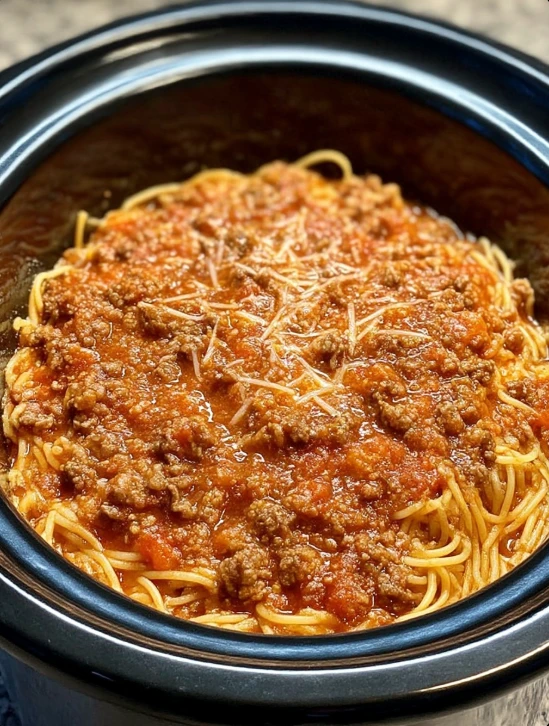
In the engineering of large-scale communal catering, “Church Supper Spaghetti” represents a masterclass in High-Volume Thermal Stability. Unlike the traditional “al dente” preparation which suffers from rapid starch retrogradation, this slow-cooker methodology utilizes a Continuous Infusion Environment. This allows the pasta to undergo a slow Starch Gelatinization within the lipid-rich sauce matrix, resulting in a cohesive, fully-integrated dish that maintains its structural and thermal properties over extended service durations.
Project Specifications
This build is optimized for “Passive Maintenance,” requiring a steady low-heat induction to ensure the protein and starch components reach a state of flavor equilibrium without carbonization.
- Prep Time: 20 Minutes
- Inactive Time: 30 Minutes (Pasta Hydration Phase)
- Cook Time: 3–4 Hours (On Low)
- Total Time: 4 Hours 50 Minutes
- Servings: 10–12 Units (Communal Scale)
Detailed Cost Estimate (USD)
| Cost Driver | Role | Est. Cost |
|---|---|---|
| Lean Ground Beef (90/10) | Primary Protein Base | $11.00 |
| Durum Wheat Spaghetti | The Starch Foundation | $2.50 |
| San Marzano Style Tomato Base | The Acidic Solvent | $4.50 |
| Whole Milk Mozzarella | Viscous Texture Modifier | $5.00 |
| Total Estimated Cost | $23.00 | |
The Ingredient Architecture
The Protein Core
1kg Ground Beef: Must be browned prior to containment. This ensures the removal of excess aqueous runoff and initiates the Maillard Reaction for deeper savory notes.
The Starch Foundation
500g Spaghetti (Dry): We utilize dry pasta to act as a “moisture sponge.” As it hydrates within the sauce, it absorbs the Flavor-Laden Lipids rather than just neutral water.
The Acidic Solvent (The Matrix)
Marinara, Diced Tomatoes, and Tomato Paste: A multi-viscosity blend. The paste provides Glutamate Concentration, while the diced tomatoes offer structural inclusions.
The Aromatic Trinity
Green Bell Peppers, Onions, and Garlic: These provide the volatile sulfur compounds that define the “supper” profile. They soften during the slow-cook phase to create a seamless Cellular Integration with the sauce.
The Phase-Based Workflow
Phase 1: Pre-Processing & Carbonization
Sauté the beef and aromatics in a skillet until the meat reaches an internal temperature of 71°C (160°F). Drain the excess lipids to prevent “Oil-Slick Surface Dynamics” in the final dish.
Phase 2: Matrix Layering
In the slow cooker, layer the meat mixture with the tomato solvent. Set to “Low” and allow to simmer for 3 hours. This is the Flavor Consolidation Phase.
The Science: Long-duration heating at low temperatures facilitates Protein Hydrolysis. The connective tissues in the beef break down into gelatin, which thickens the sauce and improves the “mouthfeel” without the need for added starches.
Phase 3: Starch Hydration & Integration
Break the spaghetti in half (to improve Hydraulic Flow) and submerge it fully into the liquid matrix. Add 1 cup of water if the viscosity is too high.
The Logic: If the pasta is not fully submerged, it will undergo Differential Cooking—where some strands are soft and others remain in a brittle, crystalline state. We rely on the sauce’s water content to drive the Osmotic Absorption into the pasta core.
Phase 4: Viscous Capping
Once the pasta is tender (approx. 30–45 mins), top with shredded mozzarella. Replace the lid for 10 minutes to reach the Cheese Glass Transition Temperature.
Resting & Servicing
Prior to service, the dish should be tossed to ensure the Cheese-Starch Emulsion is evenly distributed. This prevents the cheese from forming a single, impenetrable shield on top.
The Science: Resting the spaghetti for 15 minutes post-cook allows the pasta to reach Moisture Equilibrium. This prevents the “puddling” effect often seen in freshly plated pasta, as the starch molecules finish bonding with the aqueous sauce components.
Final Service: Serve at 65°C (150°F). This temperature is high enough to inhibit microbial growth during long church suppers while remaining safe for immediate consumption. Pair with Garlic Starch Modules (bread) for a complete carbohydrate-loading profile.