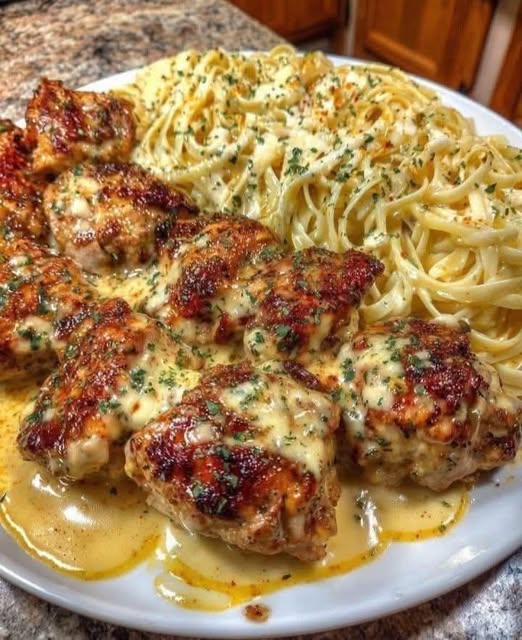
🍝 The “Velvet” Garlic Butter Chicken Alfredo
This recipe uses a “High-Heat Sear” for the chicken to ensure it stays juicy while the sauce remains light and airy.
| Category | Details |
| Prep Time | 15 minutes |
| Cook Time | 20 minutes |
| Total Time | 35 minutes |
| Yield | 4 servings |
🍴 Ingredients
- 1 lb Chicken breast, sliced into thin strips
- 1 lb Linguine pasta
- 4 tbsp Unsalted butter
- 6 cloves Garlic, minced (yes, six!)
- 1 ½ cups Heavy cream
- 1 ½ cups Freshly grated Parmesan cheese (do not use the green can!)
- 1 tsp Italian seasoning
- ½ tsp Red pepper flakes (optional, for a subtle “back-heat”)
- Fresh parsley for garnish
👩🍳 Instructions
1. The Chicken Sear
- Season the chicken strips with salt and pepper.
- In a large skillet, melt 2 tbsp of butter over medium-high heat. Sear the chicken until golden brown and cooked through (about 5-7 minutes). Remove chicken from the pan and set aside.
2. The Garlic Infusion
- In the same skillet (don’t wash it—those browned chicken bits are flavor!), lower the heat to medium and add the remaining 2 tbsp of butter.
- Add the minced garlic and cook for only 60 seconds until fragrant. Do not let it brown, or it will turn bitter.
3. The Creamy Reduction
- Pour in the heavy cream and bring to a gentle simmer. Let it bubble for 3–5 minutes until it reduces slightly and begins to thicken.
- Stir in the Italian seasoning and red pepper flakes.
4. The “Cheese Melt”
- Turn the heat to low. Gradually whisk in the Parmesan cheese one handful at a time. Whisk constantly until the sauce is smooth.
- The Fix: If the sauce is too thick, whisk in a splash of that reserved pasta water.
5. The Grand Assembly
- Toss the cooked linguine and the seared chicken into the skillet. Fold everything together until every strand of pasta is shimmering in garlic butter. Top with fresh parsley.
The “Nutmeg” Secret: For a truly authentic flavor, add a tiny, microscopic pinch of ground nutmeg to the cream. You won’t taste “spice,” but it makes the dairy taste richer and more complex.